🌿 Building a Resilient Landscape – Wetland Creation
Brief
The South East Rivers Trust (SERT) and Southern Water Services, working with the Upper Beult Farm Cluster led a programme to enhance the River Beult in Kent. Their aim was to improve water quality, provide natural flood management solutions, strengthen biodiversity and build long term catchment resilience. The project focused on restoring the historic floodplain and riparian corridor, retaining water in the catchment for longer and reintroducing natural processes.
Will Fraser at Habitat Regeneration worked with the South East Rivers Trust, Southern Water and the Upper Beult Farm Cluster to help develop and progress the scheme over the last 3 years. As a trial project, this has been an extremely involved process. Sister company FGS Pilcher was subsequently successful in tendering for the physical restoration and creation works. Our experience in wetland creation, scrape formation, river restoration and natural flood management helped shape a landscape that supports both people and nature.
Challenge
The River Beult had been under pressure for many years. Erosion, historic land management and sewage discharge had reduced fish numbers, lowered dissolved oxygen levels and limited aquatic plant growth. The river had also been disconnected from its natural floodplain. As a result, water moved through the landscape too quickly during storms and failed to recharge soils during dry spells.
The challenge was to reinstate natural river function while protecting sensitive areas and creating new habitat for wildlife.
Solution
Habitat Regeneration and FGS Pilcher delivered targeted interventions designed to rebuild hydrology, stabilise the river and create varied wetland features.
Key works included:
• Collaboration
Worked closely with SERT, Southern Water, Kent Wildlife Trust, private landowners and the Upper Beult Farm Cluster to ensure all interventions supported shared ecological goals.
• Scrape Creation
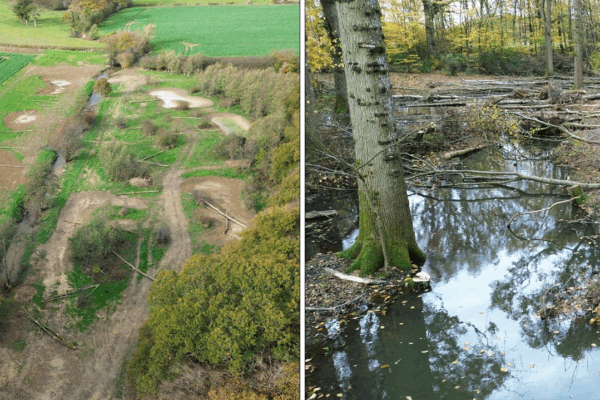
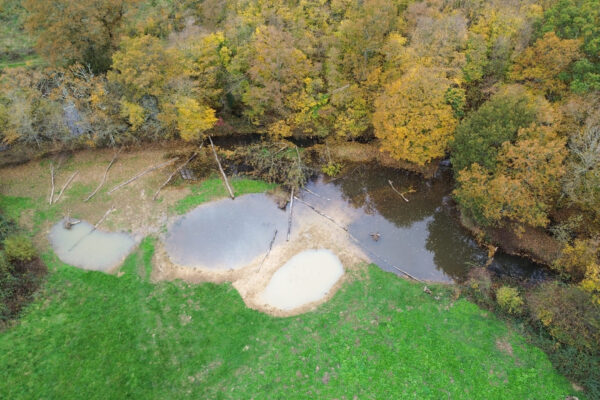
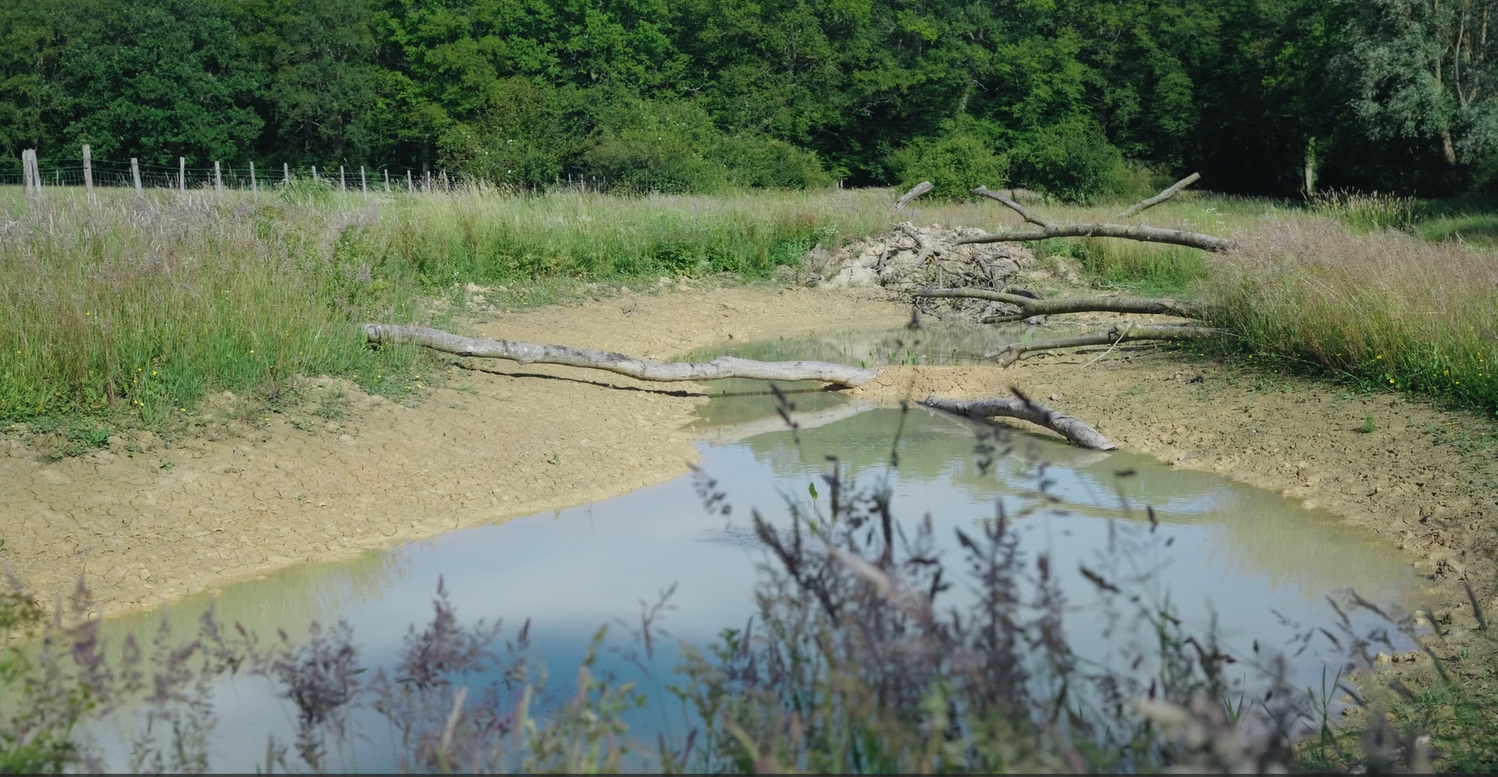
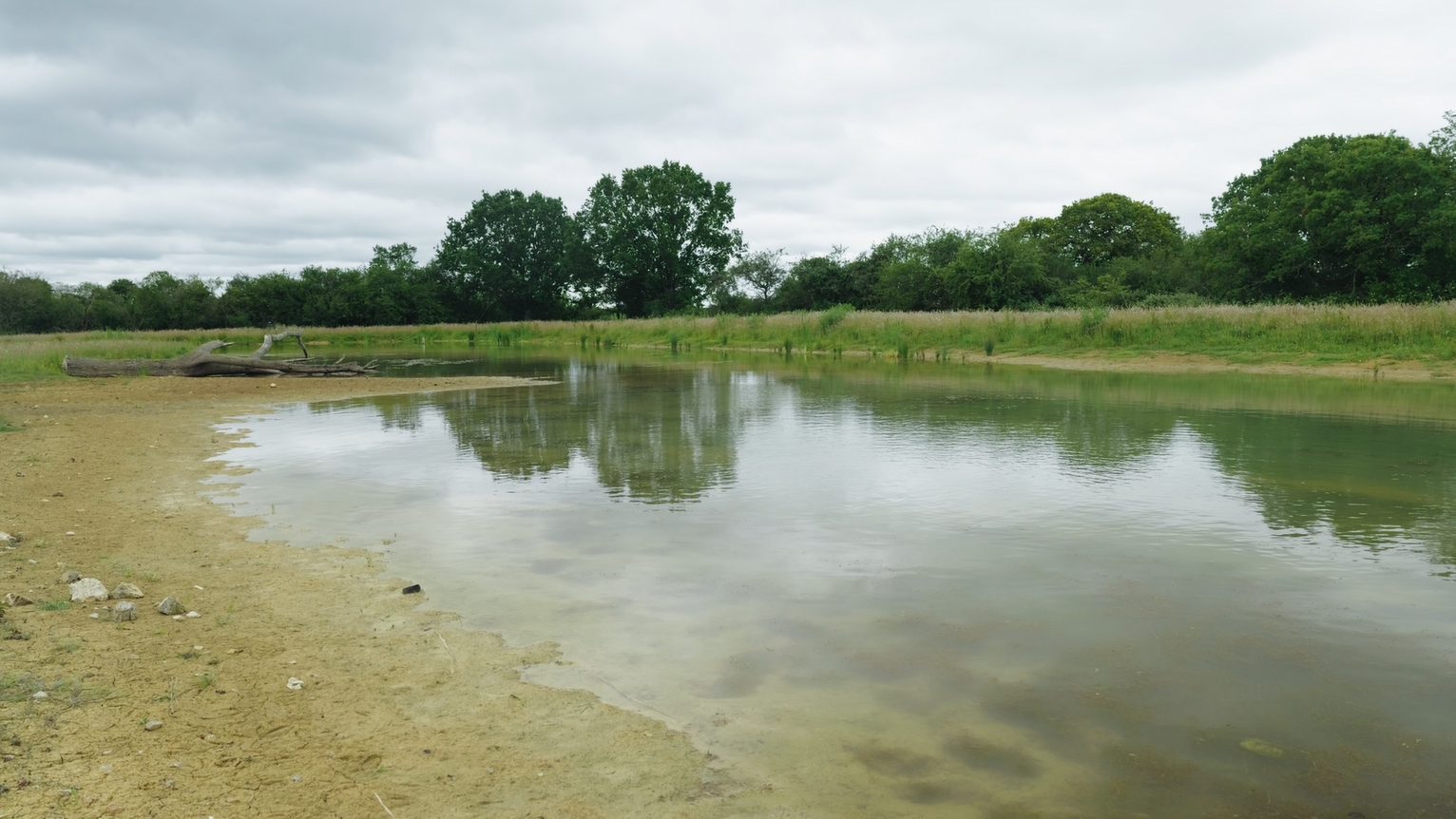
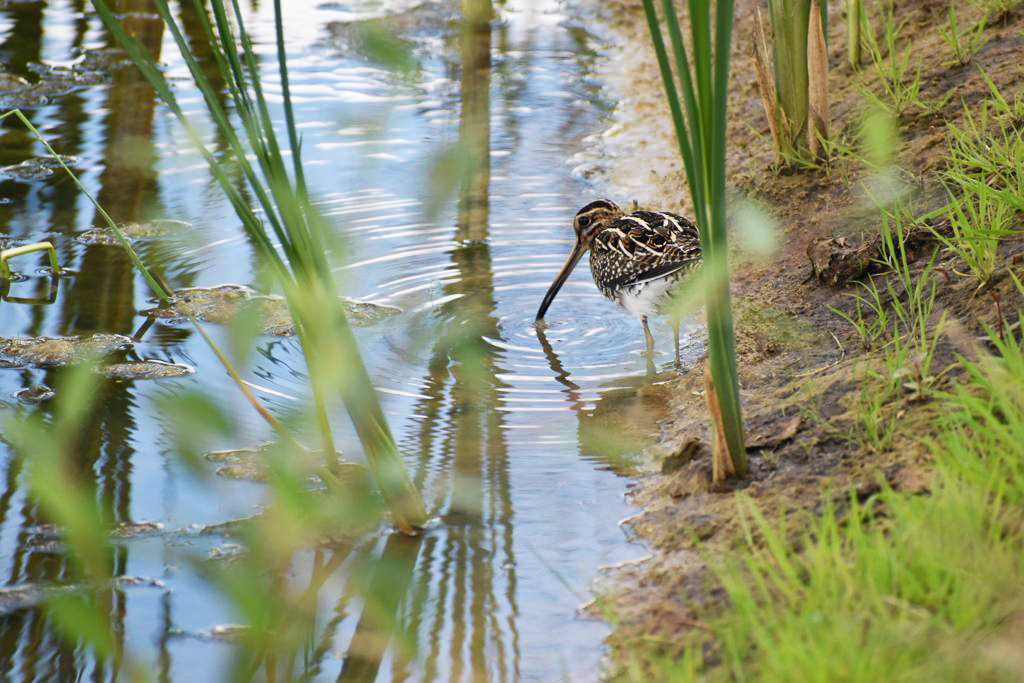
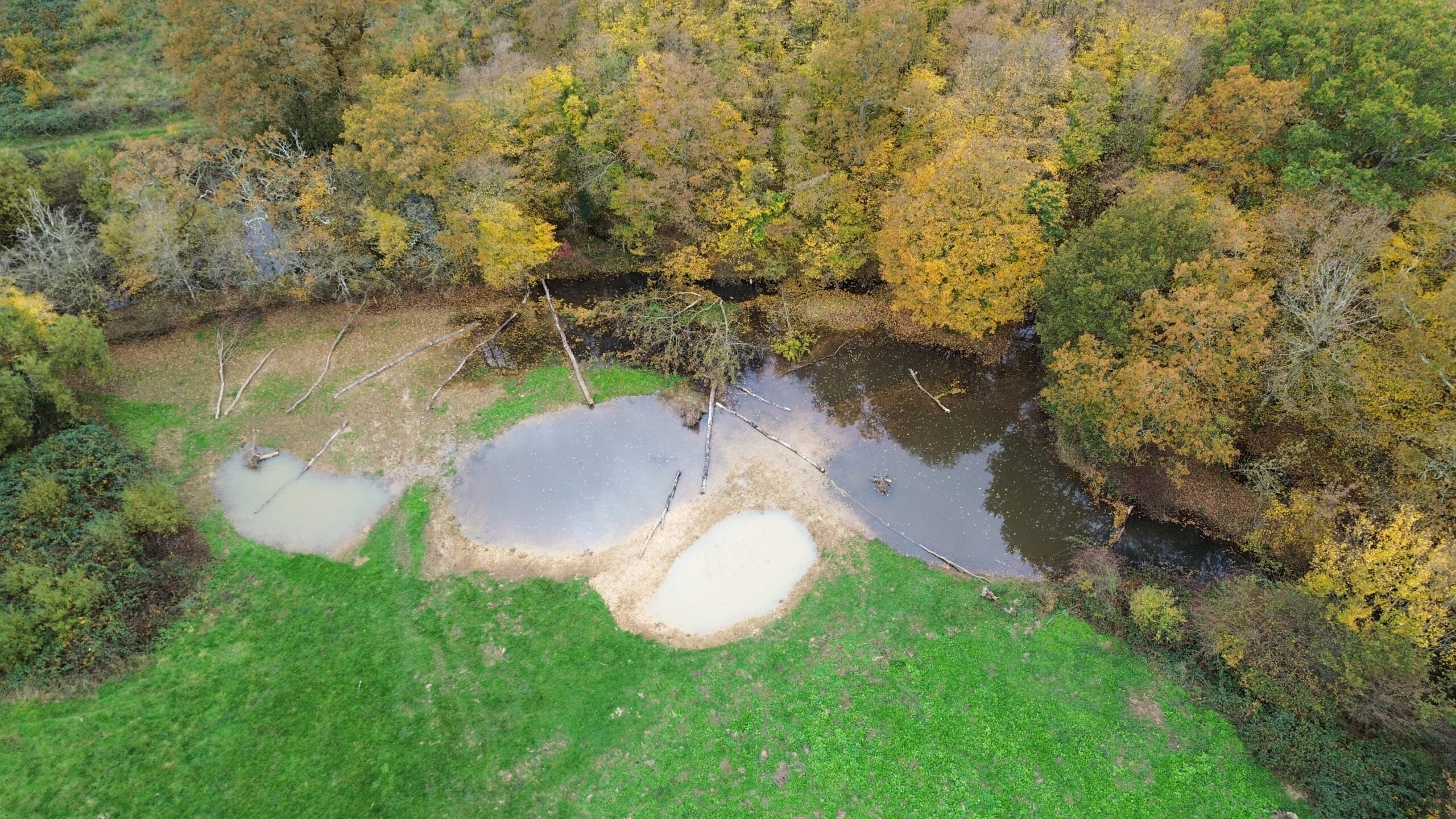
Excavated shallow depressions across the floodplain to form seasonal wetland habitat. These features now support wildfowl, waders, amphibians and aquatic invertebrates while improving water quality.
• Riprap Rock Installation
Strengthened vulnerable riverbanks using large stones that slow erosion and stabilise water flow.
• Floodplain Reconnection
Supported wider restoration work where straightened channels were infilled and water was encouraged to spill naturally into woodland and grassland areas during high flows.
• Natural Flood Management Measures
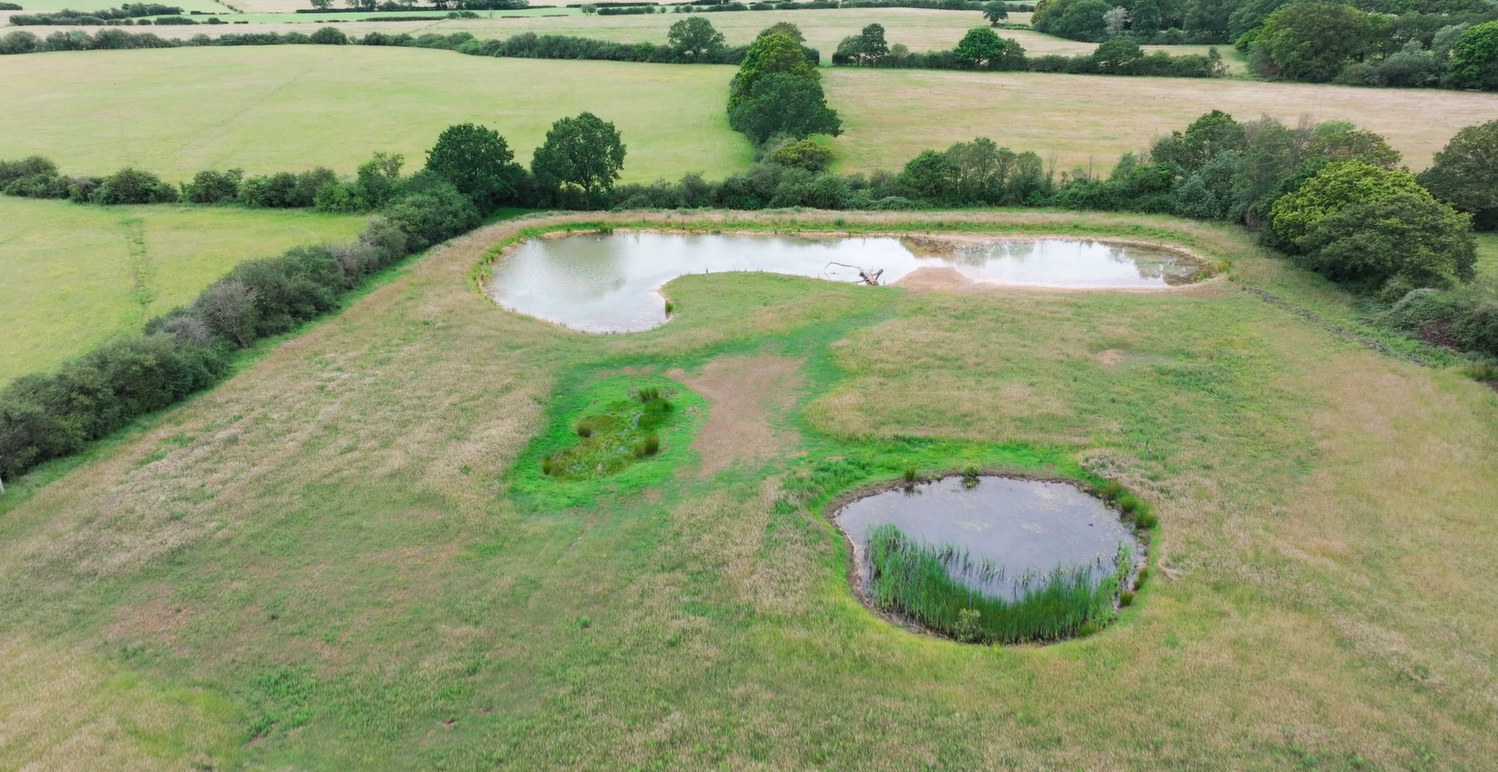
Delivered a range of nature based solutions across the site, including pond creation, channel blocking, flow diversion through wetlands and leaky structures that slow runoff.
Collectively, these works restored natural processes, increased habitat diversity and built greater climate resilience into the landscape.
Outcome
The scheme has delivered 16ha of wetland habitat within the Upper Beult headwaters, managing the 23.55km2 catchment more resiliently. To assist with this, 30 ponds and scrapes have been created which will help to retain 60,000m3/yr, excluding the floodplain holding capacity itself. There has also been 1km of channel enhancement and reconnection helping to slow the flow and reduce peak flows during high rainfall events.
The site is already showing strong ecological and hydrological recovery. Water now holds in the landscape for longer, reducing peak flood flows and helping maintain moisture during dry spells. Wetland habitats are forming across the floodplain and early wildlife returns include waders, wildfowl and amphibians.
Standing water is visible for weeks after rainfall, vegetation diversity is increasing and the river is functioning more naturally. These early gains reflect the power of simple, well designed nature based solutions to create lasting change.
This project demonstrates how collaborative, practical action can transform degraded floodplain areas into thriving wetland systems that support cleaner water, healthier soils and richer biodiversity.
Long Term Monitoring
We are committed to ensuring this project delivers benefits well into the future. Habitat Regeneration is enrolled in a five year monitoring programme to track ecological change, water quality and hydrological performance across the site.
This long term approach allows us to:
• Measure how the wetland and floodplain evolve
• Understand which interventions produce the strongest results
• Capture data that informs future nature based solutions
• Share learning across the sector to improve river and wetland restoration practices
Ongoing monitoring ensures this project continues to support both wildlife and local communities while providing valuable evidence for future environmental decision making.