Environment Agency Introduces RPS 374 to Help Accelerate River Restoration Projects
The Environment Agency has published a new Regulatory Position Statement (RPS 374) that represents a positive step forward for organisations delivering river restoration, wetland creation and nature recovery projects across England.
The new guidance aims to remove unnecessary regulatory barriers for certain low-risk abstraction activities, helping eligible environmental projects move from design to delivery more efficiently while maintaining robust environmental safeguards.
For landowners, conservation organisations, water companies, local authorities and environmental consultants, this could mean shorter project timescales, reduced programme risk and more investment being directed towards habitat creation rather than lengthy consenting processes.
__________________________________________________________________________________________________________
What is RPS 374?
Under normal circumstances, many projects involving the abstraction of water require an abstraction licence from the Environment Agency.
RPS 374 introduces a more proportionate, risk-based approach for certain low-risk activities that are carried out primarily to deliver ecological improvement.
Where a project meets all of the qualifying criteria and complies with the conditions set out within the Regulatory Position Statement, an abstraction licence may not be required. Instead, project teams must notify the Environment Agency before work begins and demonstrate that all relevant conditions have been satisfied. The legal framework for abstraction remains unchanged, but the Environment Agency has confirmed that it will not normally take enforcement action where qualifying projects fully comply with the RPS.
For more info visit Low risk abstraction for nature recovery actions and fish or eel passage: RPS 374 – GOV.UK
__________________________________________________________________________________________________________
Which Projects Could Benefit?
RPS 374 applies to a range of nature recovery and river restoration activities, including:
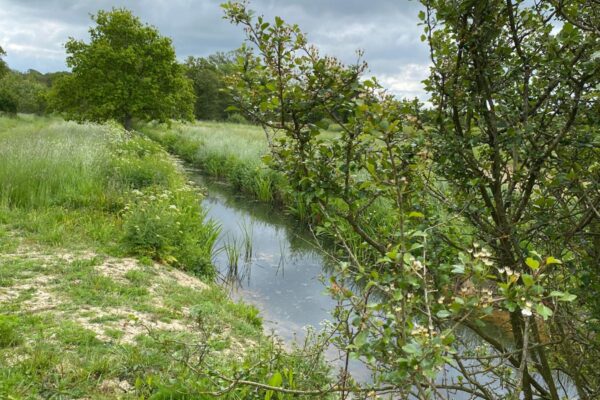
– Creating new bypass channels
– Creating new additional river channels
– Backwaters and fish refuge habitats
– Removing raised river banks to reconnect floodplains
– Fish, eel and elver passage improvements
– Other qualifying ecological restoration projects
Many of these interventions form part of wider river restoration, wetland enhancement and natural flood management programmes that are becoming increasingly important across the UK.
__________________________________________________________________________________________________________
A Faster Route to Nature Recovery
For organisations delivering environmental projects, the benefits could be significant.
By streamlining the consenting process for eligible schemes, projects can progress more quickly from design through to mobilisation. This reduces delays, lowers programme risk and helps ensure that more project funding is invested directly into habitat improvements rather than regulatory administration.
Importantly, environmental safeguards remain in place. Projects must still satisfy strict conditions, demonstrate ecological benefit and avoid causing environmental harm or impacting other lawful water users.
__________________________________________________________________________________________________________
Supporting River Restoration at Catchment Scale
Across the UK, there is growing recognition that healthy rivers depend on restoring natural processes rather than relying solely on engineered solutions.
Projects such as floodplain reconnection, backwater creation, fish passage improvements and wetland restoration help improve biodiversity, enhance water quality, support fisheries, reduce flood risk and create more resilient catchments.
The publication of RPS 374 reflects this wider shift towards nature-based solutions and provides a practical mechanism for delivering environmental improvements more efficiently while maintaining appropriate regulatory oversight.
__________________________________________________________________________________________________________
👉How Habitat Regeneration Can Help
At Habitat Regeneration, we specialise in delivering practical habitat creation and river restoration projects that provide long-term ecological and hydrological benefits.
Working alongside our sister company FGS Pilcher, we combine experienced environmental teams with specialist machinery to deliver projects ranging from pond and wetland creation to floodplain reconnection, river restoration, fish habitat improvements and natural flood management schemes.
Our expertise extends beyond construction. We work closely with landowners, environmental consultants, ecologists, water companies, conservation organisations and regulatory bodies to help deliver projects that are technically robust, environmentally beneficial and delivered efficiently.
As regulatory processes continue to evolve, having an experienced delivery partner becomes increasingly important. We understand how to translate ecological designs into practical, high-quality projects that maximise environmental outcomes while helping clients navigate changing guidance and consenting requirements.
Whether you are planning a river restoration project, wetland creation scheme, floodplain reconnection or wider catchment enhancement programme, Habitat Regeneration has the knowledge, equipment and practical expertise to help deliver successful outcomes.
If you’re considering a nature recovery or river restoration project, speak to Habitat Regeneration. Our experienced team can help assess your proposals, support project delivery and ensure your scheme is implemented safely, efficiently and to the highest environmental standards.
📞 01233 821233 📧 enquiries@habitatregeneration.co.uk 🌿 www.habitatregeneration.co.uk